Unraveling the Daily Mystery: Why Sunrise Times Are Never Static
Have you ever wondered why the exact moment of dawn seems to shift, teasing us with earlier mornings in summer and a more leisurely appearance in winter? The quest to understand what time does the sun come up isn't just about setting your alarm; it's a journey into the intricate dance between our planet and its star. While it might feel like the sun plays favorites, blessing some days with an early glow and others with a late start, the truth is far more scientific and incredibly consistent, governed by the immutable laws of physics and geography.
Before we dive deep, let's clear up a common misconception – a little mind-bender that often surprises people. The sun doesn't actually "rise." Instead, it's our Earth that's constantly spinning, rotating on its axis, which creates the illusion of the sun ascending into the sky each morning. As your location on the planet rotates into the sun's direct view, we perceive it as sunrise. This fundamental understanding is key to grasping all the fascinating variations we're about to explore.
The Cosmic Choreography: Earth's Rotation, Orbit, and Axial Tilt
The primary reason for day and night, and thus the daily appearance of the sun, is Earth's continuous rotation. Our planet spins on its axis, completing one full rotation roughly every 24 hours. This spin carries different parts of the globe into and out of direct sunlight, creating the cycle of day and night.
However, the specific time the sun comes up isn't solely dictated by this daily spin. It's profoundly influenced by two other critical astronomical factors:
- Earth's Orbit Around the Sun: Our planet isn't stationary; it's on an elliptical journey around the sun, completing an orbit approximately every 365 days. While this orbit is responsible for our years, its interaction with our planet's tilt creates seasonal changes.
- Earth's Axial Tilt: This is arguably the most crucial factor behind the seasonal variation in sunrise and sunset times, and indeed, our seasons themselves. Earth's axis isn't straight up and down relative to its orbit; it's tilted at an angle of approximately 23.5 degrees. As Earth orbits the sun, different hemispheres are tilted towards or away from the sun at different times of the year.
During summer in the Northern Hemisphere, for instance, the Northern Hemisphere is tilted towards the sun. This means it receives more direct sunlight for a longer portion of the day, resulting in longer daylight hours and earlier sunrises. Conversely, during winter, the Northern Hemisphere is tilted away from the sun, leading to shorter days and later sunrises. The solstices (summer and winter) mark the extremes of this tilt, while the equinoxes (spring and autumn) represent points when neither hemisphere is significantly tilted towards or away from the sun, leading to roughly equal day and night lengths worldwide.
Geographic Coordinates and Local Clock Time: Latitude, Longitude, and Time Zones
Beyond the grand cosmic movements, our specific location on Earth plays an enormous role in determining what time the sun comes up.
Latitude's Profound Impact
Latitude, your distance north or south of the equator, is a major determinant of day length and, consequently, sunrise times. Near the equator, day and night lengths remain relatively constant throughout the year, with sunrise occurring around 6 AM year-round. As you move towards the poles, the seasonal variation becomes extreme.
- Near the Equator: Minimal seasonal variation; roughly 12 hours of daylight year-round.
- Mid-Latitudes (like Houston, Texas): Significant seasonal shifts. In summer, the sun might appear around 6 AM, while in winter, it might not show up until after 7 AM. This distinct pattern is why places like Houston experience noticeable changes from season to season. For a deeper dive into these localized shifts, explore When Does the Sun Rise in Houston? Seasonal Changes Explained.
- High Latitudes (Near the Poles): Experience dramatic changes, including the "midnight sun" during summer (where the sun never fully sets for days or months) and "polar night" in winter (where the sun never fully rises).
Longitude and the Standardization of Time
Longitude, your east or west position on the globe, directly relates to when the sun appears overhead. Since Earth rotates from west to east, locations to the east experience sunrise earlier than locations to the west. If every individual location used its own "solar time," clocks would constantly need adjusting as you travel.
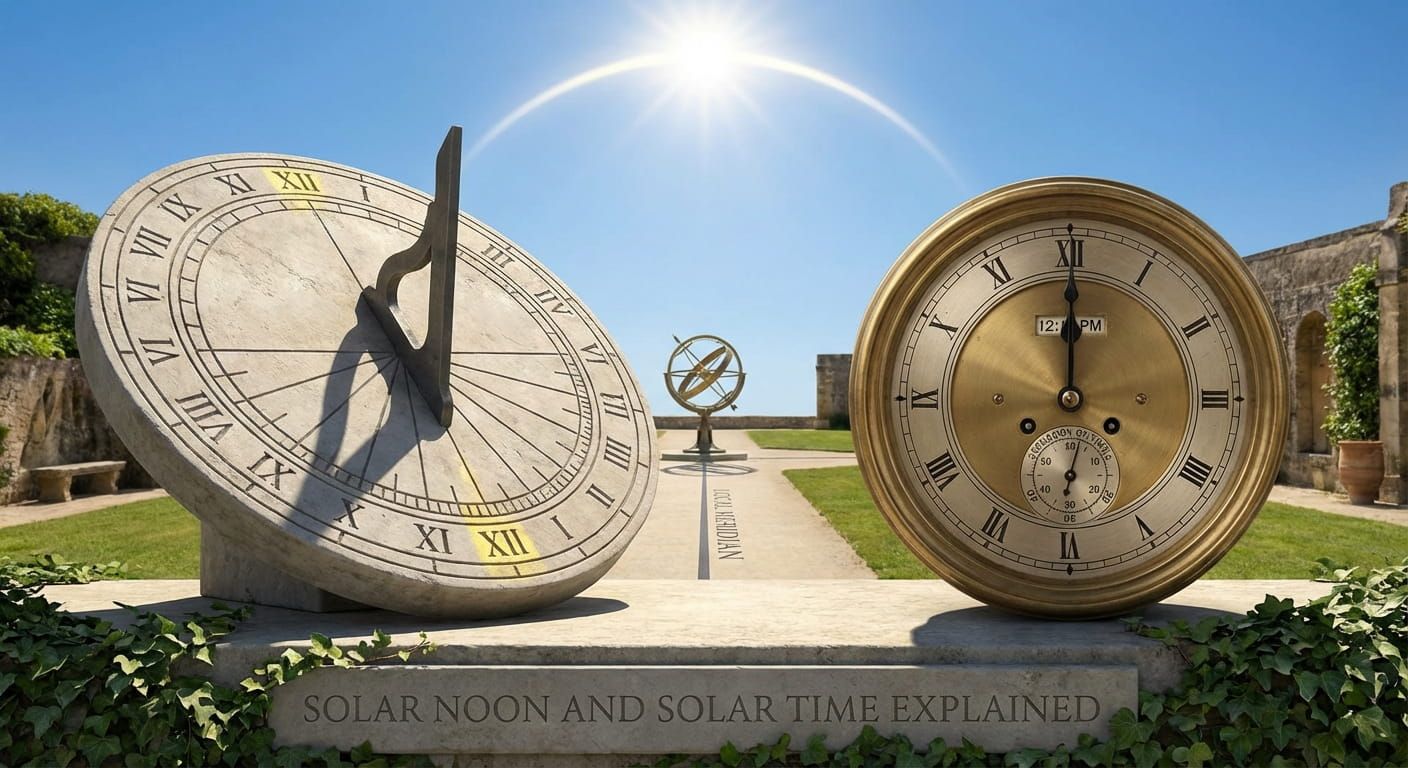
This is where time zones come in. Time zones are broad bands of longitude that share a common standard time, typically centered on a meridian. While time zones simplify daily life and travel, they also mean that the actual "solar noon" (when the sun is highest in the sky) rarely perfectly aligns with "clock noon" (12:00 PM on your watch). For those on the eastern edge of a time zone, solar events like sunrise will occur earlier by the clock, while for those on the western edge, they will occur later.
The Influence of Daylight Saving Time (DST)
Adding another layer of complexity is Daylight Saving Time (DST). Many regions observe DST by moving clocks forward an hour during warmer months. This artificial shift means that the time the sun comes up on your clock will appear an hour later than it would under standard time, even though the sun's actual position in the sky remains unchanged. DST is a human intervention designed to make better use of daylight, but it's a significant factor when comparing sunrise times on a calendar.
Beyond the Horizon: Atmospheric Refraction and Local Obstacles
While the major factors are astronomical and geographical, two more subtle elements can slightly alter when we *perceive* the sun to rise:
- Atmospheric Refraction: The Earth's atmosphere acts like a lens, bending sunlight as it passes through. This phenomenon, known as refraction, makes the sun appear to rise slightly earlier than it would if there were no atmosphere. In essence, you can see the sun when it's still geometrically below the horizon. This effect typically adds a few minutes to the apparent daylight, especially noticeable at sunrise and sunset.
- Local Obstacles and Topography: Mountains, tall buildings, or even a dense forest on your eastern horizon can delay your personal view of the sunrise. While official sunrise times are calculated for a flat, unobstructed horizon, your immediate surroundings can certainly block your first glimpse of the sun.
Practical Insights and Finding Accurate Sunrise Times
Understanding these factors isn't just an academic exercise; it has practical implications for daily life, outdoor activities, and even cultural or religious practices. Knowing what time the sun comes up can help you plan your morning run, capture the perfect photograph, or ensure you're awake for a specific event.
Here are some tips for making the most of the sunrise:
- Check Reliable Sources: Don't guess! Use dedicated sunrise calculators, weather apps, or reputable astronomical websites. These tools account for all the variables we've discussed (latitude, longitude, time of year, and even atmospheric refraction) to provide highly accurate predictions for your specific location. If you're wondering How to Find Accurate Sunrise Times for Any Location & Season, these digital tools are your best friend.
- Set Your Alarm: This might sound obvious, but it's easy to hit snooze when it's still dark outside, especially during those winter mornings. Plan ahead!
- Find the Perfect Spot: Look for a location with a clear, unobstructed view of the eastern horizon. Elevated spots often offer the best panoramas.
- Be Patient: Sunrise is a gradual spectacle. The light changes minutes before the sun's disk fully appears, offering beautiful pre-dawn colors.
- Consider Local Weather: Clouds can obscure the sunrise, even if the sun is technically above the horizon. Check the forecast to manage expectations.
Conclusion: A Daily Reminder of Earth's Grand Design
The seemingly simple question of what time does the sun come up unravels into a fascinating interplay of cosmic mechanics and earthly geography. From the tilt of our planet's axis and its annual orbit around the sun, to our exact latitude and longitude, and even the human constructs of time zones and Daylight Saving, every factor contributes to the precise moment of dawn. This daily spectacle is a constant, breathtaking reminder of our dynamic place in the universe, inviting us to appreciate the intricate forces that shape our experience of time and light.